A structured stroke diet plan USA is one of the most powerful tools for post stroke recovery and long-term prevention. In the United States, stroke remains a leading cause of disability, and nutrition plays a major role in reducing repeat stroke risk.
If you or someone in your family has survived a stroke, the fear of a second stroke is real. Nearly 800,000 Americans experience a stroke every year, and many survivors struggle with blood pressure, cholesterol, and inflammation.
The good news?Up to 80% of strokes may be preventable with lifestyle changes — including diet.
One of the most powerful changes you can make is following a clinically structured post stroke diet plan USA.
This doctor-informed guide explains:
- What to eat after stroke
- What foods to avoid
- 7-day meal structure
- Post stroke diet plan strategies
- Anti stroke diet principles
- Prevention-based nutrition
This is not a trend diet.It is a vascular protection strategy.
What Is a Stroke Diet Plan USA and Why It Matters
A stroke diet is a heart-healthy eating pattern designed to:
- Lower blood pressure
- Reduce LDL cholesterol
- Improve blood vessel function
- Control blood sugar
- Reduce inflammation
- Support brain recovery
Most strokes in the USA are ischemic strokes (caused by blocked arteries).A smaller percentage are hemorrhagic strokes (caused by bleeding).
Both require strong blood pressure control and artery protection.
According to the CDC and American Heart Association, blood pressure control, sodium reduction, and increased intake of fruits, vegetables, whole grains, and healthy fats are central to stroke prevention in the United States.
Quick Summary: Best Stroke Diet Plan USA After Stroke
If you want the simple answer:
- Keep sodium under 1,500 mg per day
- Eat 5–9 servings of fruits and vegetables daily
- Choose whole grains instead of white bread
- Eat fish 2–3 times per week
- Use olive oil instead of butter
- Avoid processed foods
- Control portion sizes
- Stay hydrated
Now let’s go deeper.
Why the Stroke Diet Plan USA Matters After Stroke
After a stroke, the brain enters a repair phase called neuroplasticity.
Nutrition supports:
- Nerve healing
- Muscle rebuilding
- Energy production
- Blood flow improvement
- Inflammation reduction
A poor after stroke diet increases risk of:
- Recurrent stroke
- Heart attack
- Worsening hypertension
- Slow recovery
Diet is not optional in recovery.It is foundational.
Sodium: The #1 Stroke Risk Driver
High blood pressure is the leading stroke risk factor in the United States.
Sodium increases blood pressure.
Target:
- Ideal: Under 1,500 mg per day
- Maximum: 2,300 mg per day
Avoid:
- Processed meats
- Canned soups (unless low sodium)
- Frozen dinners
- Fast food
- Salty snacks
Always check labels.
Potassium: The Natural Blood Pressure Protector
Potassium helps counter sodium.
Include:
- Bananas
- Sweet potatoes
- Spinach
- Avocados
- Beans
- Yogurt
Important: If you have kidney disease, consult your doctor before increasing potassium.
Post Stroke Diet Plan USA(Simple Portion Model)
Use this easy daily structure.
Vegetables 1–2 cups per meal
Whole grains ½–1 cup cooked
Lean protein 3–4 ounces cooked
Healthy fats 1–2 tablespoons
Fruit 1 serving per meal or snack
Keep portions consistent.
7-Day Stroke Diet Plan USA Meal Plan
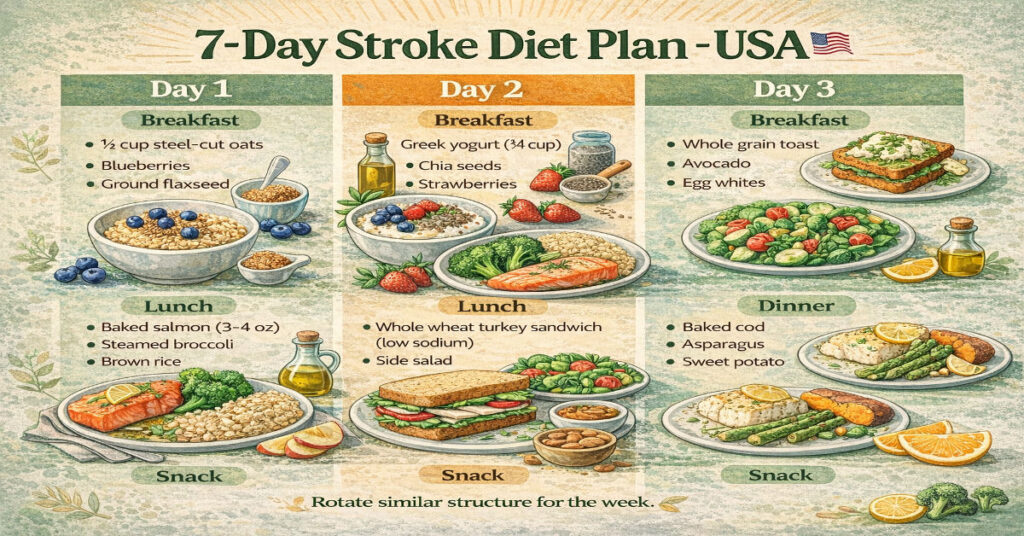
This sample stroke diet plan is designed around heart-healthy, brain-supportive foods commonly available in the United States. The structure can be rotated throughout the week using similar nutrient-dense options.
Day 1
On Day 1, begin your morning with ½ cup of steel-cut oats topped with fresh blueberries and a sprinkle of ground flaxseed for fiber and omega-3 support.
For lunch, enjoy 3–4 ounces of baked salmon served with steamed broccoli and a side of brown rice, providing lean protein and anti-inflammatory nutrients.
Dinner can include a warm bowl of lentil soup paired with a fresh spinach salad drizzled with olive oil, supporting vascular health and steady blood sugar.
For a snack, have sliced apple with natural peanut butter for a balanced combination of fiber and healthy fats.
Day 2
On Day 2, start with ¾ cup of Greek yogurt topped with chia seeds and fresh strawberries, delivering protein and antioxidants.
Lunch may consist of a whole wheat turkey sandwich made with low-sodium turkey, accompanied by a side salad, keeping sodium intake controlled.
For dinner, prepare grilled chicken served with quinoa and roasted Brussels sprouts, offering lean protein and fiber-rich vegetables.
Snack on a small handful of almonds to provide heart-healthy fats and sustained energy.
Day 3
Day 3 breakfast can include whole grain toast topped with avocado and egg whites, supplying healthy fats and protein.
For lunch, enjoy a bean and vegetable bowl made with mixed legumes and colorful vegetables, supporting cholesterol management.
Dinner may feature baked cod served with asparagus and a baked sweet potato, offering omega-3s and potassium.
As a snack, choose fresh orange slices for vitamin C and hydration.
Days 4–7
For the remaining days of the week, rotate similar meals using the same structure:
- Choose whole grains (oats, brown rice, quinoa, whole wheat bread).
- Include lean proteins (fish, chicken, beans, lentils, egg whites).
- Add leafy greens and colorful vegetables at both lunch and dinner.
- Incorporate healthy fats such as olive oil, nuts, seeds, and avocado.
- Select fresh fruits for snacks instead of processed foods.
This rotation ensures balanced nutrition, stable blood pressure support, and reduced inflammation — key components of both post stroke diet recovery and stroke prevention diet strategies in the USA.
Stroke Diet Recipes (Simple & Practical)
Anti Stroke Lentil Bowl
½ cup cooked lentils
1 cup sautéed spinach
Olive oil
Garlic
Lemon
High fiber + plant protein + anti-inflammatory fats.
Omega-3 Recovery Plate
3–4 oz grilled salmon
½ cup quinoa
Roasted vegetables
Olive oil drizzle
Supports vascular and brain health.
After Stroke Diet and Swallowing Safety
Some stroke survivors have difficulty swallowing.
If so :
- Choose soft textures
- Avoid dry foods
- Follow speech therapist guidance
- Eat slowly
- Sit upright while eating
Never ignore choking risks.
Blood Thinners and Diet
- Warfarin
- Apixaban
- Rivaroxaban
If taking warfarin:
Keep vitamin K intake consistent.
Do not suddenly increase or stop leafy greens.
Always consult your physician before major dietary changes.
Alcohol and Stroke Risk
Limit alcohol:
- Women: No more than 1 drink per day
- Men: No more than 2 drinks per day
Some patients should avoid alcohol completely.
Foods to Avoid in a Stroke Diet Plan USA
Avoid:
- Processed meats
- Fried foods
- Sugary drinks
- White bread
- High salt snacks
- Trans fats
- Excess red meat
These increase inflammation and artery damage.
Prevent Stroke Diet Strategy
Prevention includes:
- Weight control
- Regular blood pressure monitoring
- Cholesterol management
- Physical activity (150 minutes weekly)
- No smoking
Diet works best with lifestyle change.
Best Foods to Include in a Stroke Diet Plan USA
Best breakfast after stroke:
- Oatmeal
- Yogurt with berries
- Whole grain toast + avocado
- Scrambled egg whites
Best lunch ideas:
- Grilled chicken salad
- Lentil soup
- Salmon with vegetables
Best dinner options:
- Baked fish
- Quinoa bowls
- Steamed vegetables + lean protein
Stroke Diet plan USA for Diabetics
If you have diabetes:
- Spread carbohydrates throughout the day
- Avoid refined sugar
- Choose high fiber grains
- Monitor blood sugar closely
Stable glucose reduces vascular complications.
When to Seek Medical Help
Call 911 immediately if you notice:
- Face drooping
- Arm weakness
- Slurred speech
- Sudden confusion
- Severe headache
Remember FAST:
Face
Arms
Speech
Time
Frequently Asked Questions About Stroke Diet Plan USA
What is the best stroke diet in the USA?
A DASH or Mediterranean-style diet focusing on low sodium, high fiber, lean protein, and healthy fats.
Can diet prevent a second stroke?
Yes. Lifestyle modification including diet may significantly reduce recurrence risk.
Is coffee allowed?
Moderate intake is generally acceptable if blood pressure is controlled.
How much salt is safe?
Ideally under 1,500 mg daily for high-risk individuals.
Are eggs allowed?
Yes, in moderation, especially if cholesterol levels are monitored.
People Also Ask About Stroke Diet Plan USA
What is the best breakfast after a stroke?
A heart-healthy breakfast after stroke includes oatmeal, berries, Greek yogurt, whole grain toast, and egg whites. Avoid processed meats and high-sodium foods.
What foods heal the brain after a stroke?
Foods rich in omega-3 fatty acids, antioxidants, and fiber support recovery. These include salmon, walnuts, spinach, berries, and olive oil.
Is a low sodium diet necessary after stroke?
Yes. High sodium increases blood pressure, which is the leading stroke risk factor in the United States. Most experts recommend limiting sodium to under 1,500 mg per day.
Can diet reverse stroke damage?
Diet cannot reverse brain injury, but it supports recovery and reduces the risk of another stroke.
What should stroke patients avoid eating?
Stroke patients should avoid processed meats, fried foods, sugary drinks, trans fats, and excess salt.
Internal Stroke Education Resources
For deeper understanding, also read:
- Facial paralysis stroke symptoms
- Stroke recovery timeline
- Warning signs of stroke
- Rehabilitation exercises after stroke
- Blood pressure diet plan
Building full stroke knowledge improves prevention.
Medical Disclaimer
This educational content does not replace professional medical advice. Always consult a licensed healthcare provider before making dietary or lifestyle changes.
Why This Matters
A structured stroke diet is one of the most powerful tools for:
- Recovery
- Prevention
- Brain protection
- Blood pressure control
- Long-term vascular health
Consistency matters more than perfection.
Small daily decisions protect the brain for years.